

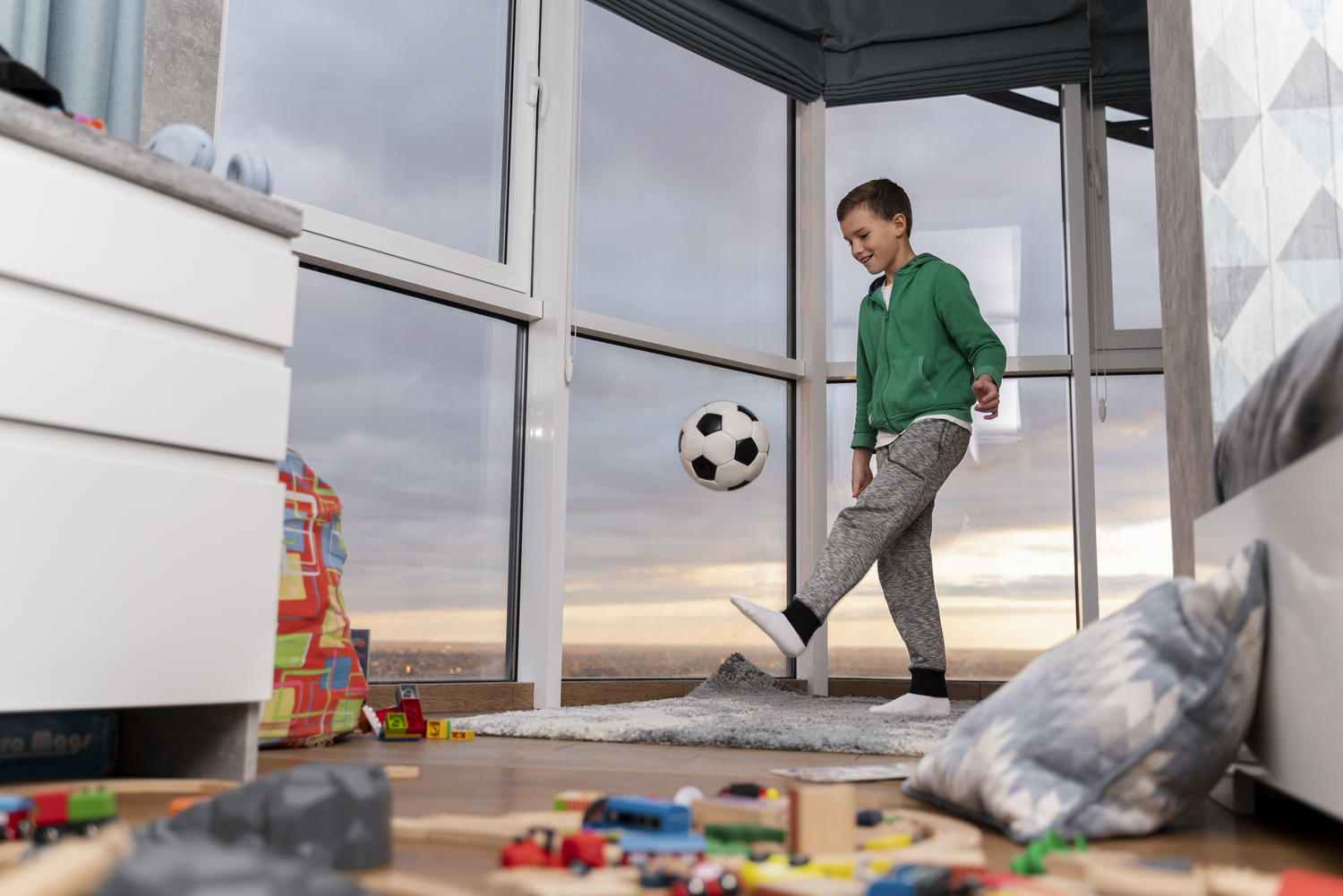
Tips for Building a Safe Home for Hyperactive Children
Having a hyperactive child is a unique challenge for parents. Children with excess energy often have difficulty staying still and enjoy running, jumping, climbing, and even exploring every corner of the house nonstop. This situation necessitates a safer and more comfortable home design so that children can continue to explore freely without risking injury. Here are some tips you can apply:
1. Choose a Safe Interior Design
Minimize sharp corners on tables, chairs, or cabinets. Use furniture with rounded corners or add rubber corner guards. Use non-slip flooring, especially in areas where children frequently walk. Rough ceramic or vinyl are good options. Avoid using large, unprotected glass, as it is prone to shattering when hit.
2. Create a Dedicated Play Space
Provide a play area with thick carpet, a mattress, or a puzzle mat to cushion impacts. Add simple physical activities like a small indoor swing, a mini climbing wall, or a trampoline for children to channel their energy. This space can serve as a "safe zone" that reduces risky activities in other areas of the house.
3. Door and Window Security
Install door and window guards to prevent children from leaving unsupervised. Use window locks or grilles with a secure design to maintain air circulation without creating a hazard. Avoid placing furniture near windows, as children can climb inside.
4. Protect the Kitchen and Bathroom Areas
The kitchen should be equipped with a protective door because it contains many sharp and hot objects. Use a built-in stovetop that is out of reach of children. In the bathroom, install a non-slip mat and store cleaning fluids in a closed container.
5. Use Safe Railings and Partitions
Stairs should be equipped with safety railings (baby gates) at the top and bottom. Use flexible partitions to demarcate risky areas such as storage rooms or parents' offices.
6. Pay Attention to Outdoor Areas
If you have a yard, ensure the fence is high enough and cannot be easily climbed over. Pools or water tanks must be securely covered to prevent accidents. Add outdoor play areas such as seesaws or slides that are safe and age-appropriate for children.
7. Choose multifunctional and safe furniture
Use cupboards or shelves that can be mounted to the wall so they don't collapse easily when climbed. Choose a sofa or bed with a sturdy frame so that it is safe for children who often jump. Avoid glassy decorations or tall furniture that can easily topple over.
8. Add Additional Security Systems
Install CCTV in vulnerable areas so parents can monitor them. Use electrical outlets with special covers to prevent children from touching them. Ensure all electrical cords are hidden or protected.
Building a safe home for hyperactive children requires extra attention to small details like furniture, flooring, doors, and even the outdoor area. The ideal home for hyperactive children doesn't mean restricting their movement, but rather providing a safe space for exploration while minimizing the risk of accidents. With the right design, children can grow up active and healthy, and parents can feel more at ease.

Date: November 14, 2026
Being single is an exciting stage of life. It is a time to build your career, explore new opportunities, travel, and focus on personal growth. But it is also an important time to start thinking about your financial future, especially when it comes to property ownership. One common question many y ...

Date: November 16, 2026
Buying your first home is one of the biggest milestones in life. It represents financial independence, stability, and a long-term investment for your future. However, purchasing a home using your own income requires careful planning, financial discipline, and the right decisions. If you are plann ...

Date: November 17, 2026
In today's fast-paced world, the concept of a comfortable home is gradually changing. Many people are beginning to realize that a beautiful and functional home does not have to be large. Instead, small homes with minimalist designs are becoming increasingly popular as people embrace a simpler, more ...

A home is more than just a place to live. It is an environment where children learn, explore, develop relationships, and build the foundation for their future. The residential environment plays an essential role in shaping a child's physical, emotional, social, and cognitive development. Choosing ...

Date: November 11, 2026
Finding the perfect home is one of the most important decisions for a family, especially when raising young children. A home is more than just a place to live; it is where children grow, learn, play, and create precious memories with their loved ones. Therefore, choosing the right home requires care ...
Ala Land Bali — a magical place for the real you
BECOME PART OF THE HISTORY Share your contact details, and our manager will reach out
with full project details